




W.henever I talk to other online marketers about how to drive traffic to their websites, I always get the same hopeful question: “How can I get cheap or free website traffic?”
And every time, I have to gently crush their dreams by giving them the one answer nobody wants to hear: there’s no such thing as free traffic.
Not real, sustainable traffic anyway. Unless you’ve figured out how to clone yourself or pause time like a Marvel character, the “free” in free traffic is really just code for “you’re going to pay with your time.”
And time—sorry to say—is the most expensive thing you’ve got. The truth is, you can get a steady stream of organic traffic without dropping piles of cash, but you’ll be trading hours, energy, and consistency to make it happen.
When time is gone, it’s gone—unlike money, relationships, or your Netflix subscription, there is no refund policy on minutes you’ve burned.
So if you want to use blogging as your inbound marketing strategy, be prepared to invest the time it takes… or go ahead and hire someone who can write it for you while you focus on literally anything else.
Why Great Headlines Matter for Getting Free Website Traffic
Most people think blogging is some magical shortcut to free website traffic, as if writing a few posts will summon visitors like a digital Pied Piper.
But if you do it wrong—and most people absolutely do—you’ll waste hours staring at a blinking cursor, burn yourself out, and wonder why Google refuses to acknowledge your existence.
Blogging works, but only when you treat it like a long-game strategy instead of a “post once and pray” hobby.
Done consistently, it becomes a powerful engine that builds trust, attracts readers, and brings in traffic while you’re busy living your life. Skip the strategy, skip the research, skip the quality, and your blog will sink faster than a lawn chair at a pool party.
The Data Won’t Lie to You
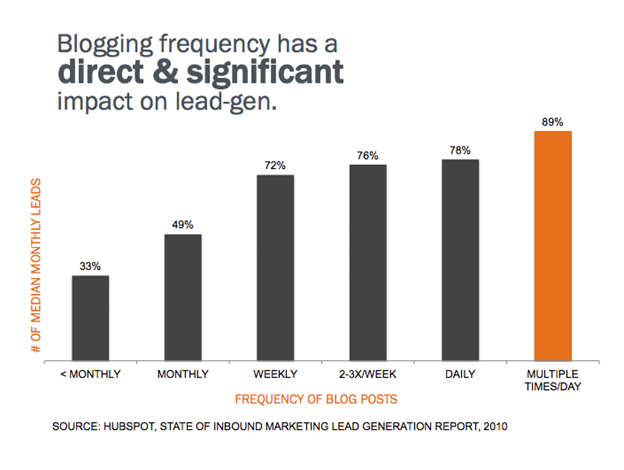
If you look at the data (yes, real data—not your cousin’s “my blog went viral once” story), HubSpot has been telling us the same thing since 2010: blogging drives traffic, and traffic drives leads. And not just a sprinkle of traffic—you need steady, grown-up, big-boy traffic if you want your business to generate actual leads instead of tumbleweeds.
Free website traffic isn’t really “free,” but blogging is still one of the most reliable ways to get it. Fast-forward to 2015, and the numbers only doubled down on that reality.
Websites with blogs get 97% more inbound links, 434% more indexed pages, and companies that blog pull in significantly more leads than the ones still waiting for customers to magically appear through sheer optimism.
Even 65% of American consumers have made purchases because of something they read in a blog post—proof that words still matter, even in the land of cat videos and memes.
But before you sprint into the sunset thinking blogging is a fairy-tale traffic machine, remember this: the kind of organic traffic you want doesn’t show up once and disappear like a bad Tinder date.
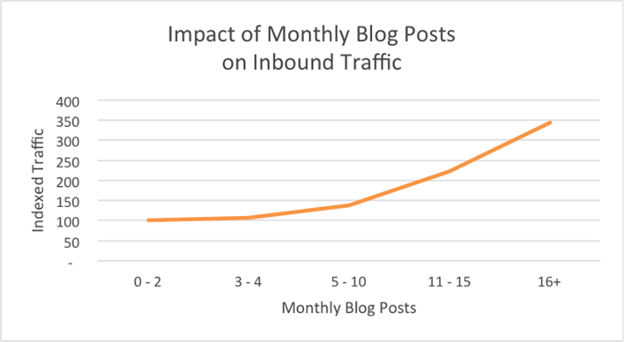
You need frequent, consistent posting if you expect those numbers to work for you. HubSpot’s follow-up data made that painfully clear—consistent blogging equals consistent results. Period.
Are You Getting the Picture?
Hopefully, by now you can see the value of showing up with consistent, keyword-focused blogging — because that’s how you get the sweet, sweet free website traffic that Google keeps giving to everyone except the people who post once every three presidential elections.
If you’re planning to use this method to generate leads and traffic without paying for ads or selling your firstborn child, then you’re going to need the following:
- Time to research the keywords and actually write the posts yourself
- A team member who can write, research, and pretend to enjoy SEO as much as you do
- Freelancers who can craft high-quality content while you sit back and sip coffee like a marketing god
- Or — the classic — a mix of all the above, duct-taped together into your very own content-creation assembly line
And with all that said, let’s be brutally honest for a moment:
If you don’t have the time to write…
If you don’t have the budget to hire someone…
And if you don’t have the bandwidth to learn SEO, master keywords, and consistently publish…
Then getting free website traffic is going to feel about as realistic as winning the lottery with a fortune cookie number.
In that case, you may want to explore alternative ways to bring traffic to your site — preferably ones that don’t require CPR, caffeine IV drips, or a minor miracle.
The Silver Lining You’ve Been Looking For
(aka: Your Chance to Beat 98% of the Internet)
Now for the bright spot in all this chaos.
Because here’s the truth: most people who “decide” to get free website traffic are absolutely, unquestionably, hilariously not going to do what it takes.
Instead, they’ll take the quick-and-lazy path by:
- Not researching their niche or market (because vibes > data, right?)
- Not doing proper keyword research before writing a single word
- Not creating anything that actually helps their target audience
- Not structuring their post like a sane, logical human
- Not optimizing their content for search (Google weeps)
- Not creating graphics to keep readers awake
- Not using any system to convert readers into subscribers or customers
- Not sharing on social media, email, or anywhere else humans actually hang out
(And yes, there are more sins… but these are the heavy hitters.)
Now, here’s where things get delicious:
Most people simply won’t do this level of work.
They want free keyword traffic, but they don’t want to earn free keyword traffic.
Which means…
If you follow what I’m about to lay out for you, you’ll immediately step onto a path that 98% of your competition will never even touch.
And that is where the seeds of your domination—uh, I mean success—take root.
If you need a reason to invest time in writing detailed, well-structured, SEO-smart blog posts, here it is:
Sometimes those suckers go viral.
And when they do?
Bazinga.
You just leveled up in real time.
Suddenly you’re the person everyone wants.
Doors that used to be locked tighter than Fort Knox magically swing open.
You’re getting:
- Speaking invites
- Guest blog requests
- Podcast appearances
- Collaboration offers
- JV deals
- And yes, actual paying clients
Overnight, you’re the authority.
The go-to person.
The Man.
…But before we let your head swell up like a Macy’s parade balloon, we need to break down the basic parts of a powerful blog post — and how all those parts work together to pull in free website traffic like a leaf blower sucking up confetti.
Ready? Let’s get into the mechanics.

An Overview of a Blog Post
In this section, I’m going to show you exactly what a blog post is made of — not the fluffy “just write from your heart” nonsense, but the actual structure that helps you pull in free website traffic and not just pity clicks from your mom.
Once you see the overall format and flow of a solid post, you’ll be able to shave serious time off your writing, stop staring at the blinking cursor of doom, and start cranking out well-structured content with actual confidence.
Don’t panic — a little later, I’ll walk you through how to research your topic, find the right keywords, and write each section so you know exactly what to say (and where to say it) to attract the right readers.
As a writer of advertising copy, I’ve found that writing blog posts is a lot like writing ad copy:
You’re still selling an idea, a solution, or a next step… you’re just doing it in yoga pants instead of a suit.
Blog Post Parts You Must Know
Here are the basic parts of a blog post laid out:
- The Headline – The attention-grabber that makes people stop scrolling and think, “Okay, fine, I’ll click.”
- Relevant Picture – A visual that signals, “This is about your problem,” not a random stock photo of a woman laughing at salad.
- Introduction – Call out the problem or desire your reader is dealing with so they know they’re in the right place.
- Key Points / Promise – A quick rundown of what you’re going to cover and how it’ll help them fix something, get something, or stop something.
- Main Sections – Your step-by-step breakdown where you walk through each point in detail, giving clear actions, examples, or frameworks.
- Conclusion – Tie everything together, remind them what they learned, and point them toward the next move.
- How to Share the Info – A nudge to pass the post along, save it, or send it to a friend who’s still doing everything the hard way.
- Support Material – Checklists, templates, links, or resources that help them implement what you just taught (and keep them coming back).
When you build posts like this consistently — with the right keywords baked in — you’re not just “writing content.” You’re building little SEO soldiers that go out and bring you free website traffic 24/7.
Don’t Forget These Power Stations
Throughout my posts, I also use subheads to break things up. Subheads tell your reader when a new section is starting and give them a taste of what’s coming next. Think of them as mini-billboards inside your post.
You want your subheads to be a little tantalizing — enough to hook their curiosity and pull them down the page, one section at a time. Done right, your reader doesn’t even realize they’ve just inhaled 1,500 words. And when that happens, Google sees a beautiful thing:
People actually staying, scrolling, and reading.
That’s when the free website traffic starts rolling in.
The Headline – The Dominant Beast of Your Post
The headline is probably the most important part of any post. In advertising copy the headline is seen as so vital that most seasoned copywriters obsess over it. It’s not uncommon to hear that a copywriter will write and rewrite a headline hundreds of times before landing on a good one.
In blogging the headline is just as vital. However, there are a few more restrictions that are placed on bloggers that copywriters don’t have to contend with.
First of all, to make sure your post is prepped for SEO, you don’t want to have as long of a headline in blogging as you would in copywriting.
Just to give you an idea, here’s a headline written for a direct mail piece by the famous marketer Dan Kennedy:
“Announcing An Elegant And Sophisticated Referral System Your Competition Doesn’t Know About That’ll Generate An Endless Flow Of Customers, Clients Or Patients Who Are Predisposed To Do Business With You…Even If You’ve Been Afraid To Ask For Referrals Or Your Customers Don’t Know How.”
Why Your Headlines Can’t Be 123 Characters Long
Now, here’s a headline by the blogging genius, Jon Morrow:
“How I Wrote Posts That Touched the Hearts of More Than 5 Million People”
As you can see, headlines for printed material can be as long or as short as you want it to be. With blogging the rule of thumb is to keep your title under 65 characters.
And the reason for this is quite simple. A blog will take your title and turn it into a URL for your posting page.
Here is a good example:
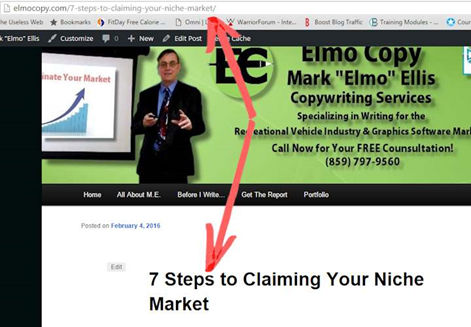
Figure 1.
Keep Your URL (and Your Sanity) Short
If you look closely at Figure 1 above, you’ll notice something important:
The title “7 Steps to Claiming Your Niche Market” matches the blog post’s URL.
That’s not an accident.
Most blogging platforms automatically grab your headline and stuff it into the URL like a Thanksgiving turkey. But here’s the catch:
They only use the first 65–70 characters before the rest gets chopped off like a bad haircut.
So if your headline is longer than a CVS receipt, your URL is going to look like it took a nap halfway through your sentence. That’s why you want to aim for around 65 characters — short, sharp, and share-friendly.
Shorter Headlines for Social Media
There’s another reason to keep things tight: social media sharing.
Platforms like Twitter (or whatever name it’s using this week) have character limits. Even though they’ve expanded beyond the old 140-character rule, the same principle still applies:
Shorter URLs =
More room for your message =
More room for your snark =
More clicks =
More free keyword traffic.
Plus, URLs are full of slashes, dashes, and digital hieroglyphics that eat up valuable space. You don’t want your headline getting squeezed out of the tweet like the last passenger on a crowded bus.
And let’s talk email for a second.
When someone shares your post via email, a long headline gets chopped off in the subject line like this:
Figure 2:
The-First-Half-of-Your-Headline-And-Then—…
Not exactly inspiring.
A clean, short, keyword-rich headline makes your URL readable, shareable, and punchy — and that gives you a better chance at building the free keyword traffic you’re targeting.
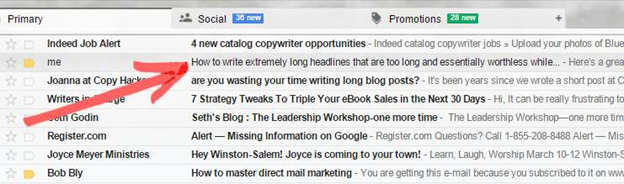
The bottom line is that if your blog post is too long, you won’t be able to use twitter to share it no matter how good it is.
Top Secret Tip: Using Amazon to Create Great Headlines
Let me pull back the curtain for you.
A while back, I was writing ad copy for a product I was promoting on Amazon, and I accidentally stumbled onto a cheat code for creating headlines, hooks, and copy that actually convert.
Here’s what happened:
I started looking at bestselling books that were similar to my product — not to copy them, but to study how their headlines and cover copy worked.
Think about that for a second.
Copywriters — real ones — write the headlines and back-cover copy for nonfiction, self-help, and how-to books on Amazon. These are people who’ve spent years mastering persuasion, clarity, message flow, and benefit-driven language.
In other words:
The best copy on the internet isn’t on blogs… it’s sitting on book covers.
So I made an educated guess:
- The cover copy of bestselling books is written by pros.
- The back-cover copy (the sales pitch) is also written by pros.
- These pros have researched the topic, the audience, the benefits, and the messaging.
- All their best ideas are sitting in plain sight.
Which means you can pull a TON of inspiration from it.
You can browse through these books and get:
- Strong phrases
- Proven headline structures
- Benefit-driven angles
- Powerful hooks
- Emotionally rich language
It’s like walking into a bakery and taking whatever smells you like — without touching the pastries.

Swipe Files: Your Creative Secret Weapon
In the ad-copy world, copywriters save good ads, taglines, hooks, and headlines in something called a swipe file.
Every top-tier copywriter has one.
Most guard theirs like it’s the nuclear launch code.
Swipe files help you:
- Spark ideas
- See structure
- Understand rhythm
- Spot patterns
- Get unstuck
- Add firepower to your writing
But let’s be very, VERY clear:
Swipe files are NOT for plagiarizing.
If you can’t write your own material, you might need to switch careers and become a professional kazoo player or something.
You can’t build a blog or copywriting business by stealing someone else’s work — but you can use their work to spark your creativity.
And another secret?
You don’t have to pull inspiration from just one source.
Use several at once.
Recently, I wrote an ad using swipes from four different sources:
- Amazon book covers helped me nail the headline
- Amazon comments gave me real-world benefits and phrases
- Reviews pointed out what the audience cared about
- Two legendary copywriters shaped the structure of the entire ad
Yes — I borrowed structure, not sentences.
I borrowed ideas, not identity.
I borrowed phrasing patterns, not paragraphs.
That’s how the pros do it.
How to Use Amazon to Generate Headline Ideas
Here are the exact steps so you can do it too:
- Look up nonfiction books in your niche — especially the bestsellers.
- Study how the cover copy is written and write down short, powerful phrases you could use to strengthen your own headlines.
- Read the customer reviews to find repeated benefits, emotional triggers, or language patterns.
- Gather your notes into a mini swipe file — something you can reference anytime you write a headline.
- Use this simple formula to craft a winner:
Benefit + Curiosity = Interest - Write at least 25 headlines. Yes, 25. The magic happens around headline #9.
- If possible, get another pair of eyes on your top picks — a friend, a writer, or someone who won’t sugarcoat things.
That’s how you use Amazon like a copywriting lab — and how you build headlines that stop scrolls, grab attention, and pump more free keyword traffic straight to your blog.
Figure 3:
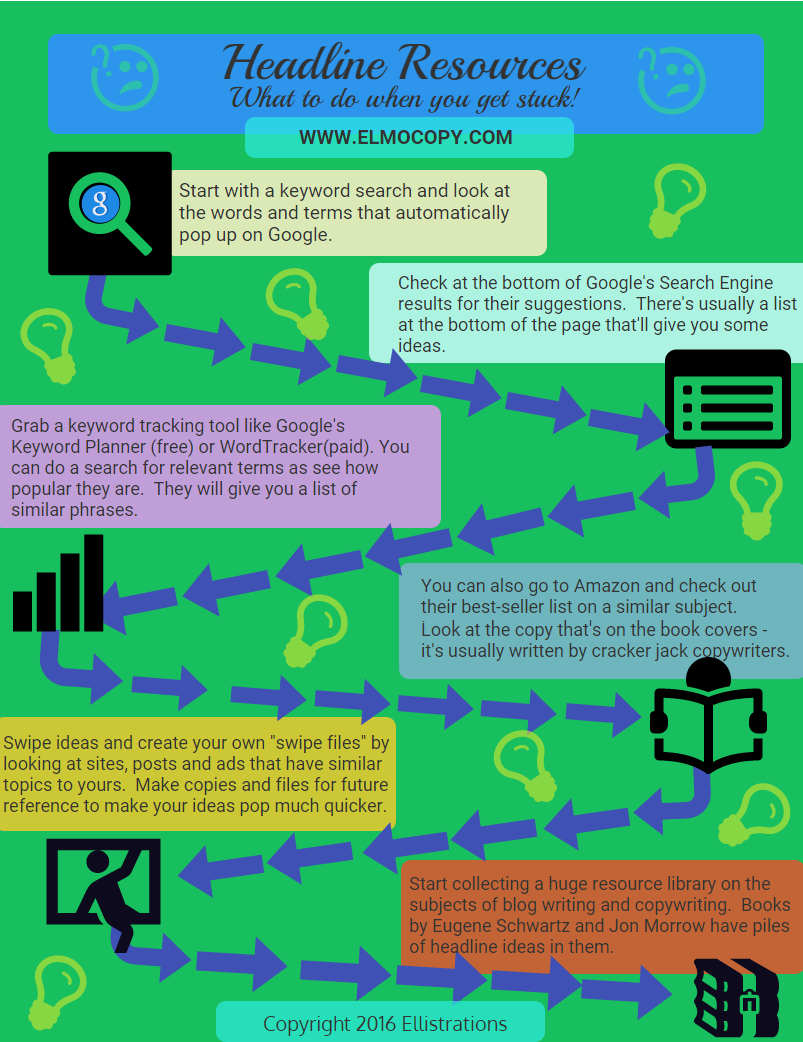
Using the Warrior Forum to Brainstorm and Test Ideas
Another method I use to help write headlines, is to bounce ideas off of other copywriters. There are a couple of online forums that I hang out on, and one of them is the Warrior Forum (WF).
There’s a whole cadre of copywriters and copywriter wannabes on there and they usually hang out in the copywriting section of the forum.
You can almost always post a headline or some copy there and get a response.
However, these guys and gals will be blunt and most of the time won’t pull any punches. So if you’re wearing soft tissue as an outer skin for your ego, you better toughen up buttercup, or you’ll get shredded.
I’m not saying that they’re mean people; they are some of the nicest people on the planet. But you will get your copy shredded and you will get brutally honest evaluations and ideas about your work.
Which is what you want.
You won’t get any better trying to write copy without someone telling you the honest truth.
So if you do go on the WF, please make sure that you thank them for any help you get. It’s rare in this world when people appreciate what you do for them.
How to Practice Writing Headlines
I often see all sorts of ideas on how to craft headlines or some other aspect of writing copy or blog posts, but rarely do I see articles that tell you a good way to practice it.
So, I’m going to give you step-by-step instructions on how to practice writing headlines.
If you practice this enough, you’ll have mastered a skill that’ll help generate interest in your posts while moving you on your way to blogging stardom.
Step 1: Research
The best advice I can give you about writing blog posts and crafting killer headlines is simple:
Know. Your. Audience.
Until you know who you’re talking to, everything you write is basically a blindfolded dart throw… but with fewer prizes.
If you can figure out what your audience actually cares about — what interests them, what annoys them, what they wish someone would explain — that’s pure, uncut gold. And that’s a super easy way to get free website traffic.
And the way you find that out?
>>>>>>>>>You ask…Listen…And observe.
Take Neil Patel’s QuickSprout site (www.quicksprout.com), for example.
He uses a small pop-up in the lower-left corner of the screen that asks visitors a simple, laser-focused question related to his niche.
If only a handful of people respond? He knows the topic is about as lively as a possum on a country road.
But if he gets a flood of answers? Jackpot.
That’s a sign the audience wants more — more content, more detail, more solutions… maybe even a product.
The point is: you must know who you’re writing for.
And that means going where your people hang out and studying them like a friendly neighborhood detective.
Visit the blogs they read.
Join the forums where they argue, complain, rant, dream, and scheme.
Pay attention to:
- The language they use
- The problems they obsess over
- What keeps them awake at night
- What they desperately want
- What they’re trying (and failing) to fix
Once you understand your target market — their voice, their frustrations, their desires — writing for them becomes dramatically easier.
Your headlines get sharper.
Your posts become more relevant.
And your content becomes the exact magnet that pulls in free website traffic.
Because now you’re not guessing what they want.
You know.
Step 2: Use Research Tools to Get Free Website Traffic
If you’re staring at a blank page wondering what on earth to write, don’t panic — research tools will save your sanity.
Start with Amazon or any online bookstore. Look for nonfiction books in your niche. The headlines, subtitles, and cover copy for these books were written by pro copywriters who get paid big money to write phrases that SELL. That means you’re looking at a buffet of headline inspiration.
Bestsellers = the good stuff.
Because trust me, those covers weren’t slapped together by interns on lunch break.
Next, let’s talk Google.
Google is basically a free brainstorming assistant with a caffeine addiction.
All you need to do is type a phrase related to your topic — like “metal detecting for profit” — and watch what happens.
Google’s autocomplete will start spilling out the most popular searches connected to your phrase. This is free research. Free keyword ideas. Free insight into what real humans are actually typing into the search bar.
It’ll look something like this:
- metal detecting for profit
- metal detecting for beginners
- metal detecting for gold
- metal detecting tips
- metal detecting how to make money
Each of these suggestions is a potential headline, angle, or topic.
This is the kind of fast, simple research that sets you up to write posts that rank — the foundation of generating free keyword traffic without breaking a sweat.
And if you scroll to the bottom of the search results page, Google gives you more keyword ideas, labeled “Related Searches,” like this:
Figure 5:

These suggestions give you a solid starting point for brainstorming. Using the example above, I’d begin a list that looks like this:
- metal detecting for profit (your original search)
- metal detecting profitable hobby
- metal detecting for fun and profit
- metal detecting finds worth money
- metal detecting finds
From just those ideas, I could start crafting something like:
“How to Turn Metal Detecting Into a Profitable Hobby While Still Having Fun”
(under 60 characters and keyword-packed)
That’s all it takes to get your brain warmed up.
One simple list → one simple headline → and boom, you’ve started writing.
See?
Figure 6:
Step 3: Use a Formula
Here’s the first headline formula I ever learned from my copywriting mentor, and it’s pure gold:
I = B + C
or
Interest = Benefit + Curiosity
That’s it.
The whole magic trick.
When you start writing headlines, your job is simple:
Identify the main benefit your target reader is desperately searching for
(the thing keeping them up at night)
AND THEN
Spark enough curiosity that they have no choice but to click.
Let’s break it down with a legendary example.
Headline:
“Amazing New Formula From Beverly Hills Lets You Look Years Younger”
This beauty comes from the one and only Gary Halbert — and if you don’t know who he is, pause your life and go look him up immediately.
Now, check out how perfectly it uses the formula:
Curiosity:
“Amazing New Formula From Beverly Hills”
If you’re a woman who wants to look great (or a man who wants to know what sorcery is happening in Beverly Hills), you have to know what the formula is.
Benefit:
“Lets You Look Years Younger”
Clear. Strong. No guessing.
You know exactly what you’re getting.
Put them together and—boom—
Interest. Click. Traffic. Sales.
But here’s the part people don’t like to hear:
When you lay it out like this, it looks easy.
And that’s exactly why beginners underestimate it.
The truth?
Writing killer headlines is hard.
Very hard.
Like “parallel parking a bulldozer” hard.
But once you master Benefit + Curiosity, your headlines transform from “meh” to “magnetic,” and your posts will start pulling in the kind of free website traffic people think requires ads.
Step 4: Let’s Start Practicing
Once you have your keywords, swipes, formulas, and ideas in hand, it’s time to write.
>Not think.
>Not overanalyze.
>Not doom-scroll.
Write.
Take your keywords and push yourself to create at least 25 headlines per blog post.
This isn’t punishment — this is how you train your brain to think in headlines.
Here’s what to keep in mind:
- Make the main benefit the star of the show
- Use numbers because people’s brains love them
- Add curiosity so they MUST click
- Use words that generate excitement
- Make the reader feel something (urgency, desire, possibility)
- Keep it concise (ideally 60–70 characters)
A Small Side Note (With a Secret)
Years ago, when I got serious about drawing, I found a great teacher.
She told me the one thing that skyrocketed her skill:
“I carried my sketchbook everywhere. Wore my pencils down to nubs. Constantly drew until my parents prayed for my social life.”
Same thing with writing.
I’m not saying you need to snuggle your laptop at night…
But the more you practice writing headlines, blog posts, and copy, the faster your skills explode.
So using the steps above, you’re going to spend an hour writing headlines.
No fewer than 25 per post.
Every time.
When you start, always focus on the core benefit of your post:
What problem are you solving?
What desire are you fulfilling?
That’s your north star.
Getting the Engine Started
Here’s a simple (but ridiculously effective) exercise to get your headline-writing motor fired up.
- Pretend you’ve got a close friend with a real problem or desire that needs solving.
- Now imagine you’ve just discovered the perfect solution — and you cannot wait to tell her about it.
- Picture yourself sitting across the table from her, blurting it all out as fast as you can. Think about the exact words you’d use. (Spoiler: you wouldn’t suddenly shift into “textbook robot mode.”)
- Write that headline out as fast as humanly possible. Don’t edit. Don’t overthink. Just blast it onto the page.
- Now write it again — but cleaner. Keep the excitement, ditch the extra fluff.
- Next, get a little more strategic. Ask yourself:
How can I spark her curiosity so much she actually wants to try this solution? - Now start layering in the rules:
- Keep it around 60–70 characters
- Make the main benefit obvious
- Add curiosity
- Add energy
- Add clarity
- Once you have a working version, rewrite it 25 times.
(Bathroom breaks allowed. Barely.) - When you’re done, look through all 25. You’ll start to develop the magical skill every great writer has: seeing the good stuff instantly and tossing the junk without mercy.
- If you need to rewrite a few — do it.
- Then get a couple of other people to look them over and give feedback.
- Finally… pat yourself on the back.
You’ve officially crafted your first blog post headline.
(Walk with swag. Act cocky. You’ve earned it.)
Conclusion
Ok now it’s up to you to go out there and grab that free website traffic.
Yes, this takes quite a bit of work but once you have a few successes under your belt you’ll really start to feel energized. The reason you’ll feel that way is because you’ll be recognized as a leader and a maven.
Sure you’ll make some money, but you’ll have a blast helping people and encouraging them too.
I hope this session was a blessing to you. Please feel free to contact me if you need any help or you get stuck. Also, it would be totally awesome if you would share my post with someone who needs it.
In my next post, we’re going to look at subheads and how to use those to start outlining your blog posts.
To your success and happiness!
P.S. If you found this blog post to be useful for your writing, please leave a comment in the box below, it will really make my day.